How to turn half-empty homes into housing opportunities
55% of homes sit half-empty while families search for housing. Here's the evaluation framework that unlocks that gap.
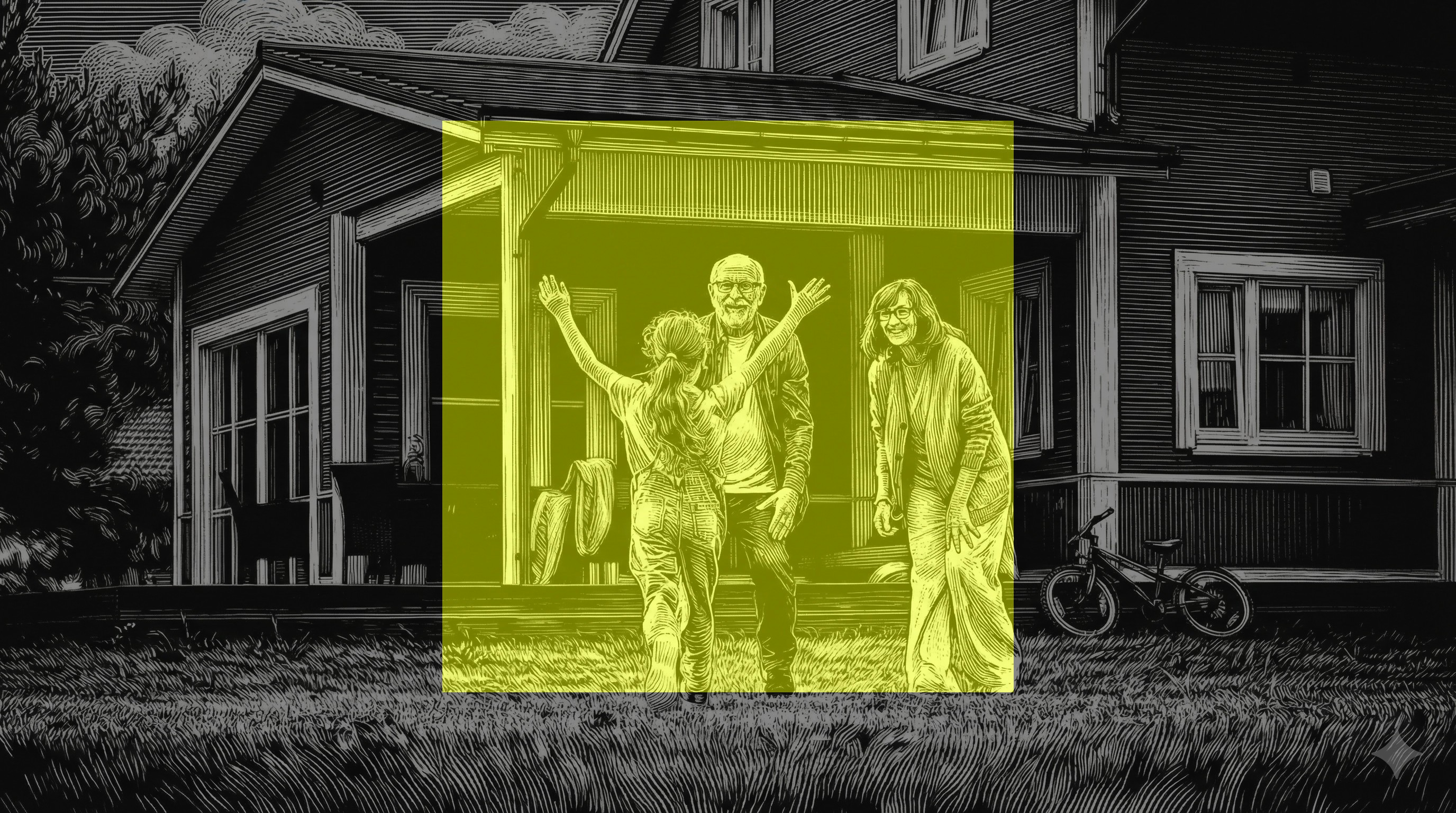


Meanwhile, young families can’t find housing. Rents are rising. Vacancies near zero.
The gap isn’t a mystery. It’s a structural misallocation. And the opportunity sits in properties no one’s asking about early enough.
The invisible pattern
An elderly couple lives in a house built for four kids.
The kids moved out decades ago. The house sits half-empty. The garden’s overwhelming. But moving feels impossible.
They’re not alone. In the UK, nearly 9 in 10 people aged 65-79 live in under-occupied housing. Germany, France, Spain. Same story.
The generation that needs the least space controls the assets with the highest capacity.
Bedrooms become storage. Gardens become burdens. Dining rooms get used twice a year.
Here’s what most people miss:
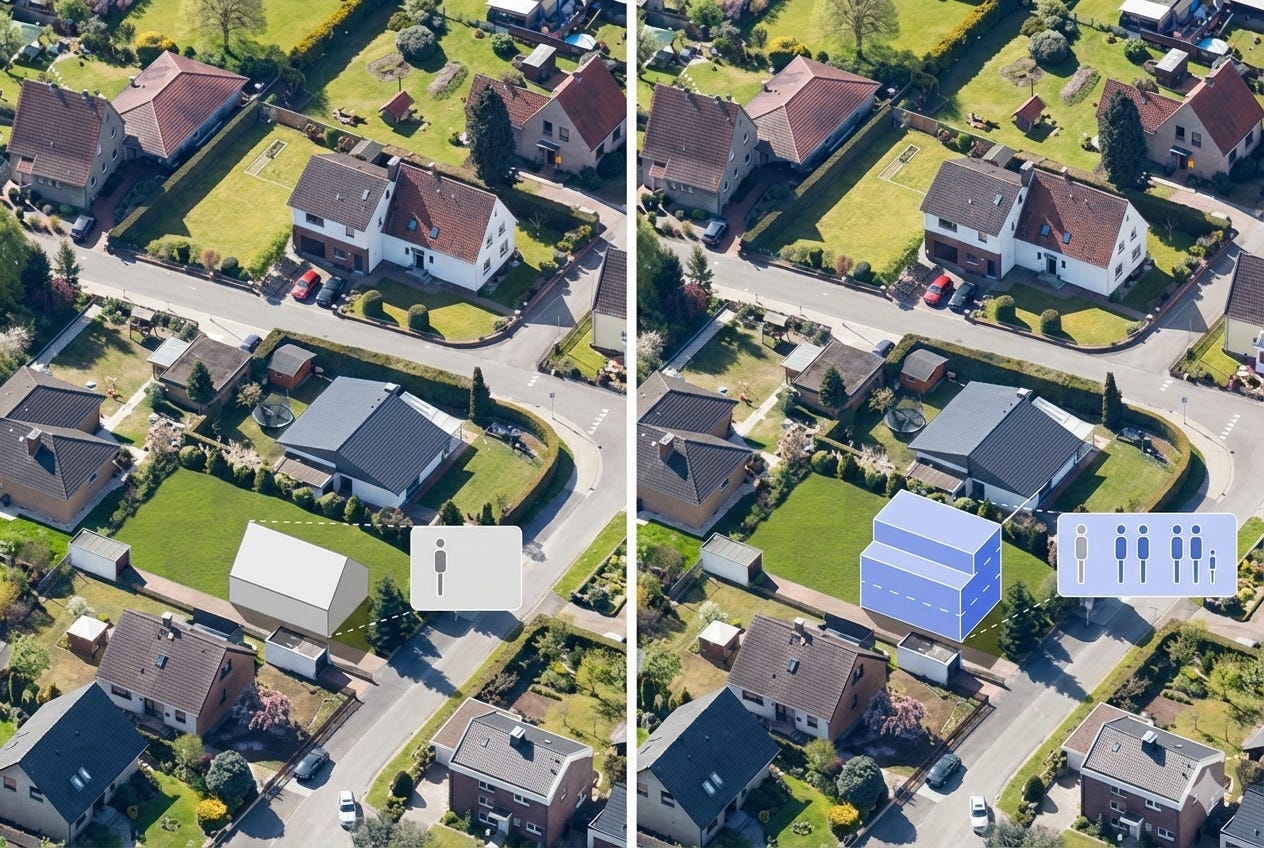
These properties often sit on land zoned for significantly more density than what’s currently built.
A single-family home on 800m² might be using 20% of the allowable building volume.
The other 80%? → Dormant potential.
For someone who knows what to look for, that’s not just an elderly couple’s house. That’s a development opportunity.
The reason it stays invisible? No one’s asking the right questions early enough.
Why expert advice falls short
When families finally start the conversation, they consult experts. And those experts give narrow answers.
Real estate agents push for quick sales.
Architects design fancy buildings.
Family members want to keep it.
Financial advisors optimize tax.
None of these perspectives are wrong. They’re incomplete.
Decisions get made in silos. The property either gets sold as-is, leaving value on the table, or sits indefinitely while the market moves on.
What’s missing: Someone who asks what’s the actual development potential, what the owner genuinely needs, what all the realistic options are and what timing makes sense.
Signal vs Noise
Noise:
Just sell it and move on. The market will figure it out. Renovation is always better than rebuilding.
Signal:
Development potential exists in the gap between current use and allowable density. Early feasibility studies can increase sale value by 5-25%. Most underused properties have 2-5 realistic paths, not just keep it or sell it. The highest-value conversations happen before properties hit the market.
The evaluation framework
If you encounter a property like this, here’s how to think about it:
Step 1: Check the development potential
What is the current condition of the building?
What are the zoning and building regulations?
How could utilization be increased?
Are there any completed projects in the area with similar objectives?
If there’s a 50%+ gap between current use and allowable use, you’re looking at real potential. If the property is already at maximum density, the conversation often ends here.
Step 2: Understand what the owner actually wants
Not what the whole family assumes. What the actual owner wants.
What’s their timeline?
Do they want to stay in the area or move?
Is this about releasing equity or preserving autonomy?
These answers determine which options are even on the table.
Step 3: Map the realistic options
Once you know the potential and priorities, evaluate paths:
Renovate or extend → Modernize, add density with timber extensions. Keeps owner in place. Lower carbon footprint. Higher cost risk, slower execution.
Rebuild → Demolish, maximize density. Potential higher returns. Requires owner to move, longer approvals, higher carbon footprint.
Sell as-is → Fastest, simplest. Leaves significant value on the table if buyer is another family, not a developer.
Sell with development concept →Attach a feasibility study showing what could be built. Increases sale price 5-25% because you’re selling potential, not just property.
Creative structures → Sale-and-leaseback with lifetime residence rights. Generational land swaps. Phased transitions. Rare, powerful when timing and trust align.
Step 4: Evaluate constraints and trade-offs
No option is perfect.
Retrofits can be unpredictable and then expensive.
New builds are expensive but controllable.
Selling feels like letting go.
Renovations take years.
Rebuilds need permits.
Zoning might change.
Moving is stressful.
Prices might shift.
Choose the path that fits the owner’s reality and the property’s potential.
How this works in practice
I’m working on this scenario right now.
Elderly couple.
Family home inherited decades ago.
Only one floor is being used by them.
Large plot, zoned for more density.
Aging in place, but climbing stairs is getting more difficult.
Maintenance overwhelming.
They didn’t know what to do. Selling felt like giving up. Renovating felt risky.
We ran a feasibility study.
The result: → Plot can support 5-unit building → Couple gets barrier-free ground floor apartment, custom layout → 4 units sold/rented, covers full construction cost + releases equity → Feasibility study added 12% to baseline property value
The construction will start in a few months. Owners move to nearby apartment during this phase. The project will be finished.
They feel safe. The market gets new housing it needs.
That’s what happens when the question gets asked early enough.
What to do next time
If you encounter this situation:
Start with the people, not the property → What does the owner actually need? What’s their timeline? Who else is involved? Heirs, advisors, partners.
Then evaluate the development gap → What’s legally possible versus currently built? Is the delta large enough to justify intervention? What are the realistic execution paths?
Ask the question early → By the time a property hits the open market as “family home for sale,” most value is already gone.
The opportunities lie in conversations that take place before the last-minute sales decision, when options are still open and trust can be built.
Most people see underused properties as a personal dilemma.
I see them as hidden potential, when you know what questions to ask and when to ask them.
Meanwhile, young families can’t find housing. Rents are rising. Vacancies near zero.
The gap isn’t a mystery. It’s a structural misallocation. And the opportunity sits in properties no one’s asking about early enough.

The invisible pattern
An elderly couple lives in a house built for four kids.
The kids moved out decades ago. The house sits half-empty. The garden’s overwhelming. But moving feels impossible.
They’re not alone. In the UK, nearly 9 in 10 people aged 65-79 live in under-occupied housing. Germany, France, Spain. Same story.
The generation that needs the least space controls the assets with the highest capacity.
Bedrooms become storage. Gardens become burdens. Dining rooms get used twice a year.
Here’s what most people miss:
These properties often sit on land zoned for significantly more density than what’s currently built.
A single-family home on 800m² might be using 20% of the allowable building volume.
The other 80%? → Dormant potential.
For someone who knows what to look for, that’s not just an elderly couple’s house. That’s a development opportunity.
The reason it stays invisible? No one’s asking the right questions early enough.
Why expert advice falls short
When families finally start the conversation, they consult experts. And those experts give narrow answers.
Real estate agents push for quick sales.
Architects design fancy buildings.
Family members want to keep it.
Financial advisors optimize tax.
None of these perspectives are wrong. They’re incomplete.
Decisions get made in silos. The property either gets sold as-is, leaving value on the table, or sits indefinitely while the market moves on.
What’s missing: Someone who asks what’s the actual development potential, what the owner genuinely needs, what all the realistic options are and what timing makes sense.
Signal vs Noise
Noise:
Just sell it and move on. The market will figure it out. Renovation is always better than rebuilding.
Signal:
Development potential exists in the gap between current use and allowable density. Early feasibility studies can increase sale value by 5-25%. Most underused properties have 2-5 realistic paths, not just keep it or sell it. The highest-value conversations happen before properties hit the market.
The evaluation framework
If you encounter a property like this, here’s how to think about it:
Step 1: Check the development potential
What is the current condition of the building?
What are the zoning and building regulations?
How could utilization be increased?
Are there any completed projects in the area with similar objectives?
If there’s a 50%+ gap between current use and allowable use, you’re looking at real potential. If the property is already at maximum density, the conversation often ends here.
Step 2: Understand what the owner actually wants
Not what the whole family assumes. What the actual owner wants.
What’s their timeline?
Do they want to stay in the area or move?
Is this about releasing equity or preserving autonomy?
These answers determine which options are even on the table.
Step 3: Map the realistic options
Once you know the potential and priorities, evaluate paths:
Renovate or extend → Modernize, add density with timber extensions. Keeps owner in place. Lower carbon footprint. Higher cost risk, slower execution.
Rebuild → Demolish, maximize density. Potential higher returns. Requires owner to move, longer approvals, higher carbon footprint.
Sell as-is → Fastest, simplest. Leaves significant value on the table if buyer is another family, not a developer.
Sell with development concept →Attach a feasibility study showing what could be built. Increases sale price 5-25% because you’re selling potential, not just property.
Creative structures → Sale-and-leaseback with lifetime residence rights. Generational land swaps. Phased transitions. Rare, powerful when timing and trust align.
Step 4: Evaluate constraints and trade-offs
No option is perfect.
Retrofits can be unpredictable and then expensive.
New builds are expensive but controllable.
Selling feels like letting go.
Renovations take years.
Rebuilds need permits.
Zoning might change.
Moving is stressful.
Prices might shift.
Choose the path that fits the owner’s reality and the property’s potential.
How this works in practice
I’m working on this scenario right now.
Elderly couple.
Family home inherited decades ago.
Only one floor is being used by them.
Large plot, zoned for more density.
Aging in place, but climbing stairs is getting more difficult.
Maintenance overwhelming.
They didn’t know what to do. Selling felt like giving up. Renovating felt risky.
We ran a feasibility study.
The result: → Plot can support 5-unit building → Couple gets barrier-free ground floor apartment, custom layout → 4 units sold/rented, covers full construction cost + releases equity → Feasibility study added 12% to baseline property value
The construction will start in a few months. Owners move to nearby apartment during this phase. The project will be finished.
They feel safe. The market gets new housing it needs.
That’s what happens when the question gets asked early enough.
What to do next time
If you encounter this situation:
Start with the people, not the property → What does the owner actually need? What’s their timeline? Who else is involved? Heirs, advisors, partners.
Then evaluate the development gap → What’s legally possible versus currently built? Is the delta large enough to justify intervention? What are the realistic execution paths?
Ask the question early → By the time a property hits the open market as “family home for sale,” most value is already gone.
The opportunities lie in conversations that take place before the last-minute sales decision, when options are still open and trust can be built.
Most people see underused properties as a personal dilemma.
I see them as hidden potential, when you know what questions to ask and when to ask them.
Meanwhile, young families can’t find housing. Rents are rising. Vacancies near zero.
The gap isn’t a mystery. It’s a structural misallocation. And the opportunity sits in properties no one’s asking about early enough.

The invisible pattern
An elderly couple lives in a house built for four kids.
The kids moved out decades ago. The house sits half-empty. The garden’s overwhelming. But moving feels impossible.
They’re not alone. In the UK, nearly 9 in 10 people aged 65-79 live in under-occupied housing. Germany, France, Spain. Same story.
The generation that needs the least space controls the assets with the highest capacity.
Bedrooms become storage. Gardens become burdens. Dining rooms get used twice a year.
Here’s what most people miss:
These properties often sit on land zoned for significantly more density than what’s currently built.
A single-family home on 800m² might be using 20% of the allowable building volume.
The other 80%? → Dormant potential.
For someone who knows what to look for, that’s not just an elderly couple’s house. That’s a development opportunity.
The reason it stays invisible? No one’s asking the right questions early enough.
Why expert advice falls short
When families finally start the conversation, they consult experts. And those experts give narrow answers.
Real estate agents push for quick sales.
Architects design fancy buildings.
Family members want to keep it.
Financial advisors optimize tax.
None of these perspectives are wrong. They’re incomplete.
Decisions get made in silos. The property either gets sold as-is, leaving value on the table, or sits indefinitely while the market moves on.
What’s missing: Someone who asks what’s the actual development potential, what the owner genuinely needs, what all the realistic options are and what timing makes sense.
Signal vs Noise
Noise:
Just sell it and move on. The market will figure it out. Renovation is always better than rebuilding.
Signal:
Development potential exists in the gap between current use and allowable density. Early feasibility studies can increase sale value by 5-25%. Most underused properties have 2-5 realistic paths, not just keep it or sell it. The highest-value conversations happen before properties hit the market.
The evaluation framework
If you encounter a property like this, here’s how to think about it:
Step 1: Check the development potential
What is the current condition of the building?
What are the zoning and building regulations?
How could utilization be increased?
Are there any completed projects in the area with similar objectives?
If there’s a 50%+ gap between current use and allowable use, you’re looking at real potential. If the property is already at maximum density, the conversation often ends here.
Step 2: Understand what the owner actually wants
Not what the whole family assumes. What the actual owner wants.
What’s their timeline?
Do they want to stay in the area or move?
Is this about releasing equity or preserving autonomy?
These answers determine which options are even on the table.
Step 3: Map the realistic options
Once you know the potential and priorities, evaluate paths:
Renovate or extend → Modernize, add density with timber extensions. Keeps owner in place. Lower carbon footprint. Higher cost risk, slower execution.
Rebuild → Demolish, maximize density. Potential higher returns. Requires owner to move, longer approvals, higher carbon footprint.
Sell as-is → Fastest, simplest. Leaves significant value on the table if buyer is another family, not a developer.
Sell with development concept →Attach a feasibility study showing what could be built. Increases sale price 5-25% because you’re selling potential, not just property.
Creative structures → Sale-and-leaseback with lifetime residence rights. Generational land swaps. Phased transitions. Rare, powerful when timing and trust align.
Step 4: Evaluate constraints and trade-offs
No option is perfect.
Retrofits can be unpredictable and then expensive.
New builds are expensive but controllable.
Selling feels like letting go.
Renovations take years.
Rebuilds need permits.
Zoning might change.
Moving is stressful.
Prices might shift.
Choose the path that fits the owner’s reality and the property’s potential.
How this works in practice
I’m working on this scenario right now.
Elderly couple.
Family home inherited decades ago.
Only one floor is being used by them.
Large plot, zoned for more density.
Aging in place, but climbing stairs is getting more difficult.
Maintenance overwhelming.
They didn’t know what to do. Selling felt like giving up. Renovating felt risky.
We ran a feasibility study.
The result: → Plot can support 5-unit building → Couple gets barrier-free ground floor apartment, custom layout → 4 units sold/rented, covers full construction cost + releases equity → Feasibility study added 12% to baseline property value
The construction will start in a few months. Owners move to nearby apartment during this phase. The project will be finished.
They feel safe. The market gets new housing it needs.
That’s what happens when the question gets asked early enough.
What to do next time
If you encounter this situation:
Start with the people, not the property → What does the owner actually need? What’s their timeline? Who else is involved? Heirs, advisors, partners.
Then evaluate the development gap → What’s legally possible versus currently built? Is the delta large enough to justify intervention? What are the realistic execution paths?
Ask the question early → By the time a property hits the open market as “family home for sale,” most value is already gone.
The opportunities lie in conversations that take place before the last-minute sales decision, when options are still open and trust can be built.
Most people see underused properties as a personal dilemma.
I see them as hidden potential, when you know what questions to ask and when to ask them.
Become an insider and read upcoming letters.
No spam, unsubscribe anytime.